Connect with us

News

Sowore Vows To Restore Fuel Subsidy If Elected President In 2027

Published

on

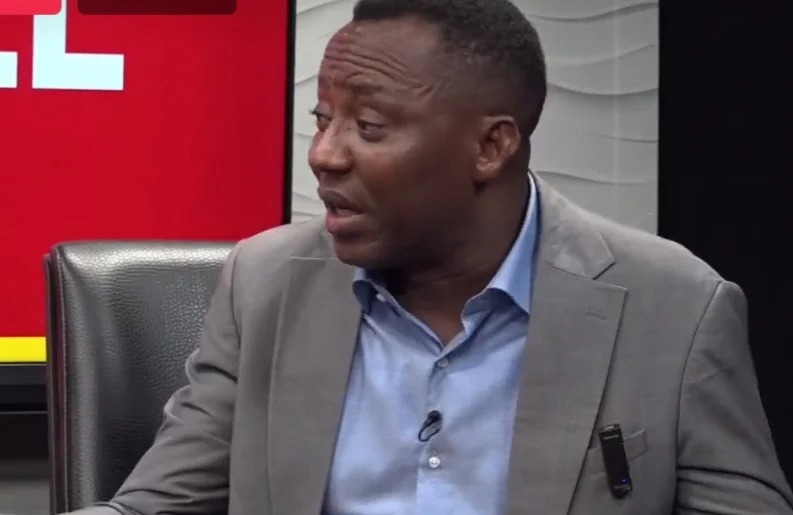
African Action Congress presidential candidate, Omoyele Sowore, has promised to reinstate petrol subsidy if elected President in 2027, arguing that the removal of the scheme has contributed to worsening economic hardship and the decline of the naira.

Sowore made the pledge on Tuesday during an interview on ARISE TV while presenting what he described as an alternative approach to tackling Nigeria’s economic challenges.

Asked whether he would return the fuel subsidy if elected, the AAC candidate gave a categorical response: “Absolutely.”

He argued that the Federal Government had not completely eliminated subsidies from the economy, claiming that support had simply shifted from petrol to other areas, including the naira.

“In the first place, they are still paying subsidy. They just changed the name of whatever they call it. They are subsidising not only petrol—because they don’t have enough and can’t produce locally—they are also subsidising the Naira. That’s one thing they will never tell you,” he said.

Sowore alleged that the exchange rate was being supported through what he called “quiet and secret” government intervention.

“The reason the Naira is at a certain, you know, rate to a dollar, is because it’s being quietly and secretly subsidized,” he said.

He said the argument against subsidy should not be reduced to whether governments should provide economic support, insisting that the real issue was transparency and who benefited from such interventions.

According to him, there was no justification for condemning petrol subsidy while other forms of government support continued.

“Yes, but why are you lying about subsidy then? You know, we have to stop telling lies about… See, what everybody has agreed happened to subsidy, it’s not that subsidy is bad, because there’s no country in the world that doesn’t subsidize their poor,” he said.

The AAC candidate also argued that Nigeria’s subsidy structure had historically favoured wealthy interests more than ordinary citizens.

He cited customs waivers granted to importers as an example, saying the value of concessions enjoyed by some businesses dwarfed the relief previously available to petrol consumers.

“In fact, the people that get the most subsidy in Nigeria is not the poor, it’s the rich. All the people who bring in, you know, foreign goods and services, go and look at their waivers at customs. You will know who is getting real subsidy compared to the people who are getting 10-10 Naira from each gallon of petrol that was taken away from them,” he said.

Sowore further linked the removal of petrol subsidy to the depreciation of the naira, arguing that the economy deteriorated soon after the policy was announced.

“And you saw what happened immediately you remove subsidy. Look at where your economy tanked. Your Naira also went down the toilet,” he said.

Rather than focusing solely on subsidy, Sowore said Nigeria needed to change what he described as an entrenched economic mindset that had allowed poverty to become widespread.

He argued that the country required a fundamentally different approach to governance and economic management.

“So, there’s no need for us to sit down here and ask, ‘Oh, what would you do differently?’ Of course, what we have to do differently first and foremost is to get rid of this old mentality and the ideas that brought poverty to become a standard, you know, household name in Nigeria,” he said.

Sowore also questioned the description of Nigeria’s economic difficulties as “multidimensional poverty”, drawing attention to the country’s food insecurity crisis.

He cited concerns attributed to the Food and Agriculture Organisation over Nigeria’s food situation, arguing that the development was particularly troubling for an oil-producing country.

“The Food and Agriculture Organization regards Nigeria as one of the places where you need food in 2026. That is to say, we are so bad, and we are about the only country producing oil that is on FAO’s list of countries that, you know, that has food shortages. That’s, that’s the country we are in,” he said.

The AAC candidate accused the government of focusing excessively on economic figures and public messaging while failing to adequately address the difficulties experienced by ordinary Nigerians.

President Bola Tinubu announced the removal of petrol subsidy on May 29, 2023, during his inauguration speech, declaring that “subsidy is gone.”

The Federal Government defended the decision on the grounds that the subsidy had become financially unsustainable, saying the funds could instead be channelled into infrastructure, education, healthcare and job creation.

The policy triggered an immediate increase in petrol prices, with transportation costs and other living expenses subsequently rising across the country.

Nelly Agwu is an educationist, a journalist, a Blogger, graduate of History. Very dynamic and a realist. A mouthpiece of the oppressed. Easy going and a Philanthropist.

GPBN Association

Trending