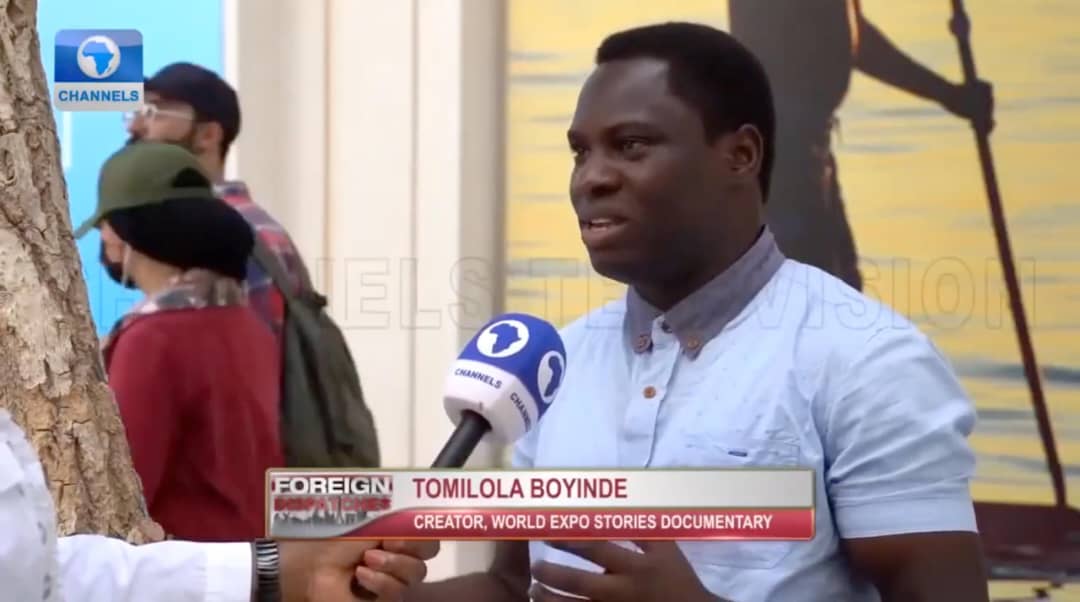
When Expo 2020 Dubai opened its doors, it became one of the most ambitious global gatherings dedicated to innovation, emerging technologies,and artistic explorationsl. For six months, nations showcased how artificial intelligence, smart infrastructure, and sustainability-driven systems might shape the future of society. While millions visited the Expo in person, much of its deeper technological meaning risked being lost once the exhibition closed. That is where World Expo Stories, a documentation project led by Tomilola Boyinde, found its purpose.
As Media Ambassador of a global industry leader in logistics and supply chain, DP World at the Expo, Boyinde moved across every pavilion, documenting inventions and emerging technologies while sharing real-time insights with global audiences through LinkedIn. Rather than treating the Expo as a spectacle, he approached it as a moment worth preserving, curating not just what was built, but what the world believed technology should become. We spoke with him about why documentation matters, how global narratives are shaped, and why the future needs better records of its past.
What first made you realise Expo 2020 Dubai was something you needed to document seriously?
Very early on, I felt that Expo 2020 Dubai wasn’t just an event, it was a snapshot of global thinking. You had countries openly showing what they believed the future should look like, not just technologically but socially and economically. I kept thinking, once this ends, how will people remember what was actually presented here? That’s when I decided to treat it as a living archive rather than a one-time experience.
How did your role as a DP World Ambassador influence the project?
It gave me both access and responsibility. I wasn’t limited to only the DP World Flow Pavilion where i was engaged, so I made it a point to visit every pavilion. That allowed me to see patterns across countries and industries, how different parts of the world were approaching digital transformation, sustainability, mobility, and infrastructure. I saw my role as connecting those dots and making them visible to people who couldn’t be there physically.
You shared photographs and information about these technologies on LinkedIn. Why that platform?
LinkedIn already hosts a global community of professionals, industry leaders, technologists, innovators and people who could leverage the updates for global impacts, so it made sense. I wasn’t trying to go viral; I wanted to be useful. I focused on explaining what I was seeing, why it mattered, and how it connected to larger global future. The feedback showed that people appreciated having context, not just headlines or promotional content.
How would you describe World Expo Stories to someone encountering it for the first time?
I’d say it’s a curated record of how the world imagined its digital future at a very specific moment in history. It’s not about predicting outcomes, but about preserving intent. Many of the technologies and inventions exhibited were still experimental, and that early thinking is often lost once things become commercial or mainstream. I wanted to capture that original thinking.
Was there anything that surprised you as you moved from pavilion to pavilion?
What surprised me most was how aligned many countries were in the problems they were trying to solve, even if their solutions looked different. Issues like sustainability, access to digital services, mobility, and climate resilience came up repeatedly. It made it clear that digital transformation is a shared global challenge, not a regional one.
Do you see this documentation itself as a form of leadership?
Absolutely. Leadership isn’t only about building technology, it’s also about shaping how people understand it. What we choose to document, how we frame it, and whose stories we tell all influence future decisions. By curating these technologies thoughtfully, I was helping shape how digital progress is remembered and learned from.
How did you decide what was worth documenting and sharing?
I looked for ideas that signalled direction rather than polish. Sometimes it wasn’t the most advanced technology, but the most thoughtful one. I paid attention to intent, design philosophy, and the problems being addressed. Those elements tend to matter more in the long run than technical specifications.
What kind of response did you receive from your global audience?
The response was very organic. People commented and also reached out saying they felt like they were walking the Expo alongside me. Others used the insights in their own work or discussions. That reinforced the idea that there was real value in translating these experiences beyond the physical event.
I understand you actually documented far more than what went public. Can you talk about that and what’s next for those records?
Absolutely. In truth, what is shared is less than 10% of everything I documented. There’s a huge body of work that remains unseen, including detailed records of innovations, prototypes, and the intentions behind them. That’s actually intentional. My priority wasn’t immediate visibility but creating a long-term knowledge archive.
The plan now is to develop a dedicated database that organizes these records for research, analysis, and future learning. This isn’t just about preserving technology, it’s about creating a resource where future researchers, policymakers, technologists, and innovators can study how global systems of innovation were conceived, what problems they aimed to solve, and how different regions approached similar challenges. The idea is to make World Expo Stories project a living reference point for future technological thinking, ensuring that the next generation can learn not only from what was built, but from the mindset and philosophy behind it. I see it as building a bridge between the past and the future, so that innovation doesn’t exist in isolation, but as part of an evolving, shared global narrative.
How has World Expo Stories influenced your own thinking about technology?
It made me even more aware that technology is never neutral. Every system reflects values, priorities, and trade-offs. Documenting the Expo forced me to think critically about not just what we build, but why we build it and who it’s meant to serve.
What role do you see yourself playing in the future of global technology conversations?
I see myself continuing to work as a bridge, between regions, disciplines, and perspectives. There’s a real need for people who can curate, contextualise, and humanise technology. That’s the space I’m committed to occupying.
As Expo 2020 Dubai fades into history, the ideas it presented continue to ripple outward. Through World Expo Stories, Kehinde Tomilola Boyinde has ensured that this pivotal moment in global digital innovation remains accessible, contextualised, and relevant, offering the future not just a memory of what was built, but an understanding of why it mattered.